
Mason Previous Residents Sources
A backward Mason address trail has separate sources for land, households, and physical setting. The current parcel record supplies the bridge to the deed index. A deed connects parties and the legal description. A dated phone book, census, or obituary can then add a household clue. These records answer different questions, so keep the source date and the person’s role beside every name.
The era table distinguishes the sources rather than making a broad claim that one list records everyone who lived at a Mason property.
| Source | Years It Covers | Where Held | What It Shows |
|---|---|---|---|
| Recorder deed index and AVA | Recorder says deeds are indexed online through 1797 | Warren County Recorder online route and counter | Document parties, parcel and legal-description leads, and conveyance sequence. |
| Auditor parcel roll | Current roll with selected value, tax, and sales history | Warren County Auditor Property Search | Current owner, property address, parcel/account, legal description, and Recorder tabs. |
| WCGS deed indexes | 1799-1832 specifically indexed in both party directions | Warren County Genealogical Society | Early deed bridge and book/page lead. |
| Mason Sanborn maps | 1898, 1911, and 1946 | Ohio Web Library | Street range, building footprint, and period context, not a name list. |
| Federal census and local phone-book leads | 1950 is the newest public federal census at the research date; local volume years are not published | WCGS and historical collections | Household snapshot or a dated address clue. |
For a recent Mason transfer, begin with the Auditor and Recorder. For an early Warren County land question, the WCGS index and archive route may supply the better book or film lead. For a house-history question, use a Sanborn sheet only after confirming that its street range covers the location.
Mason Parcel Start Point
Open the Warren County Auditor Property Search with the current Mason street address. Its address result can provide the account number, owner name, parcel number, physical address, subdivision, and lot. The parcel card adds the legal description, sale history, value history, Recorder Data, and tax tabs. Copy the physical address, account, ten-digit parcel number, and legal description into the research notes before leaving the Auditor record.
Those fields have different purposes. The property address identifies the site. An owner field documents the name on the tax roll. A tax-mail line can be different from the physical location. Neither one proves a complete household list. For previous residents, the next record must confirm a dated connection rather than relying on the current parcel screen alone.
Mason Previous Residents Deed Chain
The Recorder’s published process is a strict backward chain. Use the Auditor result first, then take the parcel number to the Recorder AVA search instructions. The Recorder says the ten-digit parcel key obtained from the Auditor is the best AVA search key, and it also says a name search returns a parcel-number item. This cross-check is more reliable than attempting to join historic deeds by a street address alone.
- Find the current Mason parcel in the Auditor address search and record its account, ten-digit parcel number, legal description, and current owner.
- Open the Auditor Sales History and Recorder Data tabs for the most recent transfer lead.
- Enter the current owner or, preferably, the ten-digit parcel number in AVA and open the acquisition instrument.
- Record the document detail, book/page or document reference, grantor, grantee, date, and the legal-description or lot wording.
- Search the prior party in the opposite role to locate that person’s earlier acquisition, then repeat the sequence one conveyance at a time.
- At every transition, verify the same legal description, parcel, or subdivision-and-lot wording. Do not substitute an address-only guess for that check.
The Recorder says all deeds are available and indexed online through 1797. If a result is unreadable, misindexed, or a certified copy is needed, use the Recorder counter at 406 Justice Drive or call 513-695-1382. That counter route is the documented fallback, not an assumption that every image or detail will display the same way online.
The Warren County Recorder is the documented custodian for this Mason deed route.
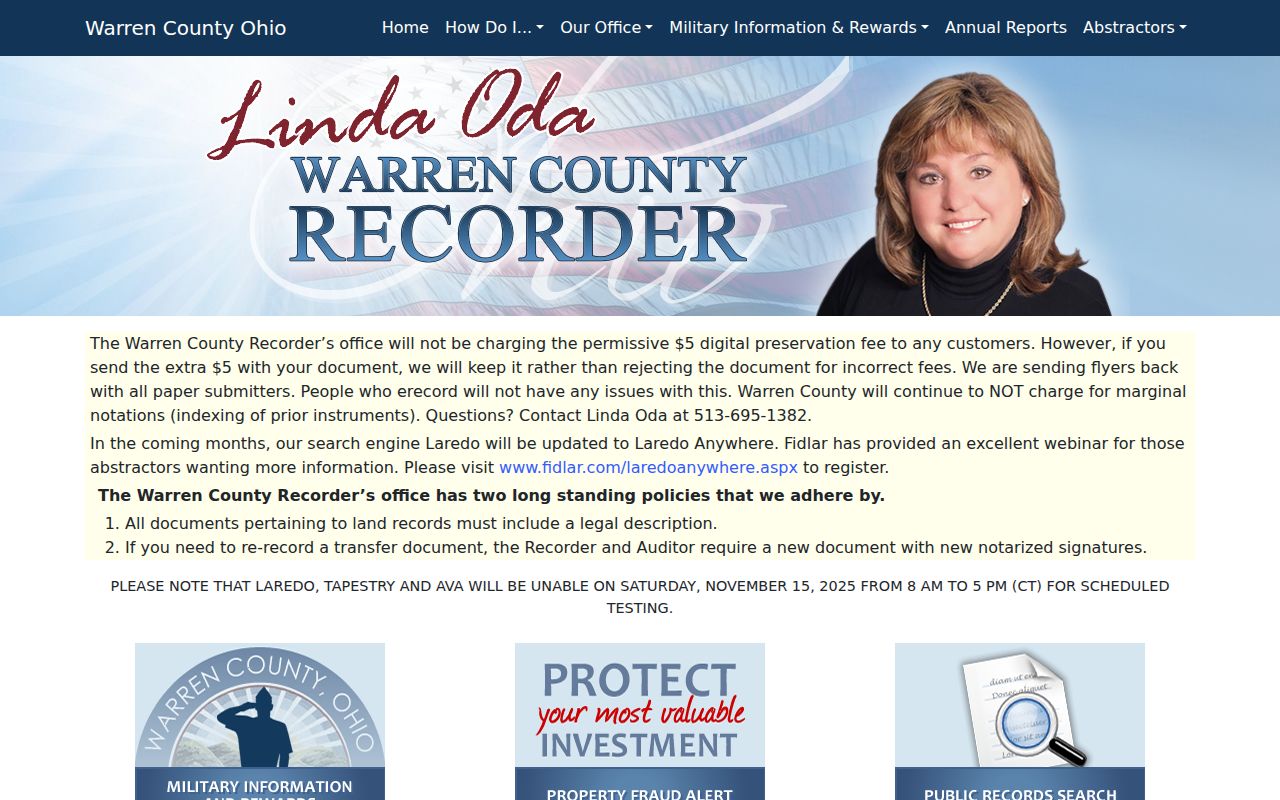
The Recorder is the document layer for a Mason ownership trail, while the Auditor supplies the parcel lead that makes each AVA search repeatable.
Preserve Mason Record Keys
The two county identifiers are easy to confuse. The Auditor uses a seven-digit account number, while the Recorder’s workflow points to a ten-digit parcel number. Preserve both, along with the legal description, because they solve different lookup problems. AVA can return a parcel number from a name search, and the Auditor record directs the researcher to the Recorder document layer. This is the documented two-way bridge for Mason previous residents research.
- Grantor
- The party conveying an interest in the instrument being read. That role must be read from the specific document.
- Grantee
- The party receiving an interest in that instrument. A later search may find the same person in the opposite role.
- Chain of title
- A sequence of recorded transfers tied together by parties and the same parcel or legal description.
- Legal description
- The recorded land description, lot, subdivision, or similar wording that can remain useful when a street label changes.
The Recorder AVA instructions explain the Auditor-to-parcel workflow used for a Mason address history.
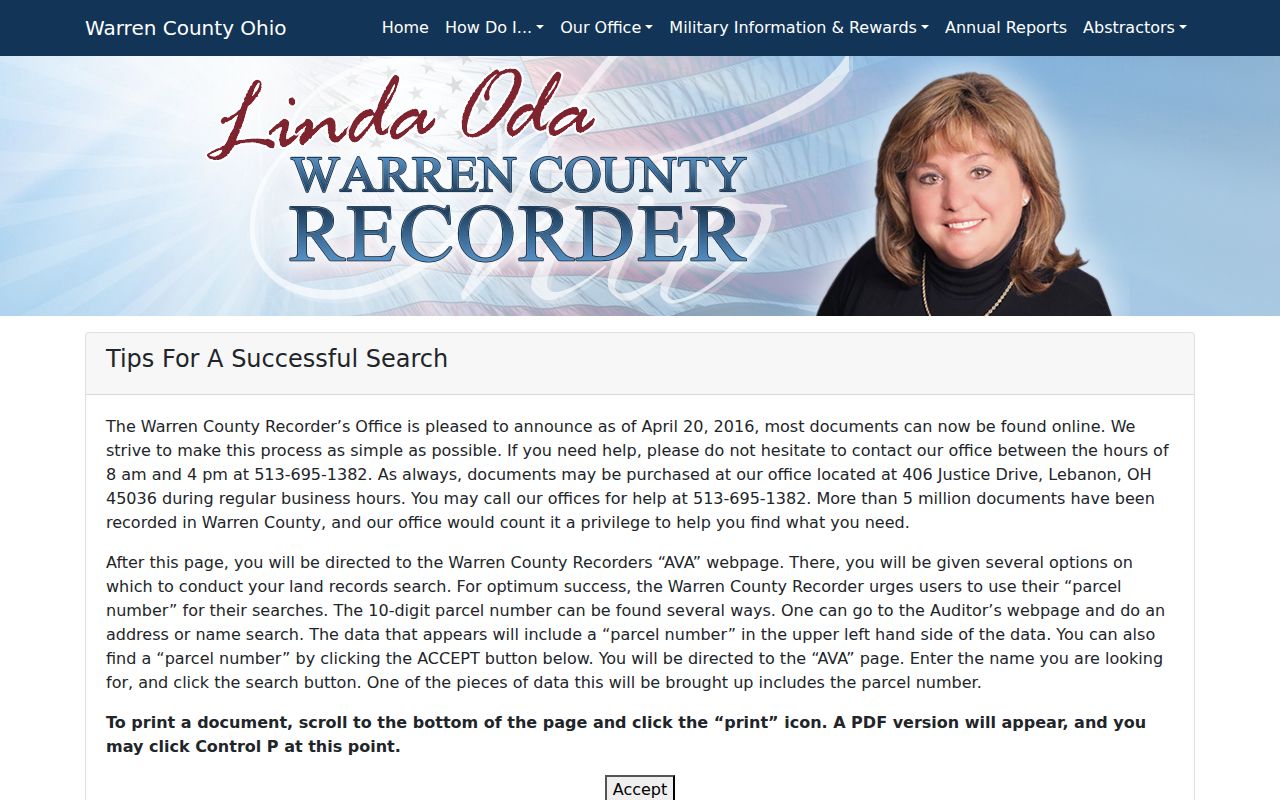
Saving the account, parcel, and legal description beside each deed makes it possible to recheck a Mason transfer without depending on a remembered street form.
Note: A seller named on a current deed is an earlier-record lead, not proof that the deed alone establishes an uninterrupted ownership chain.
Mason Land Record Bridges
For an early trail, WCGS identifies deeds from 1799 through 1832 in both grantee-to-grantor and grantor-to-grantee directions. Its tax-list indexes cover 1806-1825 and 1826-1832, with township, range, and section clues plus FamilySearch film or image references. These are bridge tools for a Mason address history, not a replacement for checking the recorded instrument and legal description.
Use the WCGS land-record guide to look for an early party and book/page lead. Compare the township and land description to the later Recorder chain. If the terms do not match, preserve the conflict instead of merging two same-name parties. The county’s early land history also predates Warren County government, so a source may point back to Hamilton County territory.
The Warren County Genealogical Society land-record resource provides the documented early-index route.
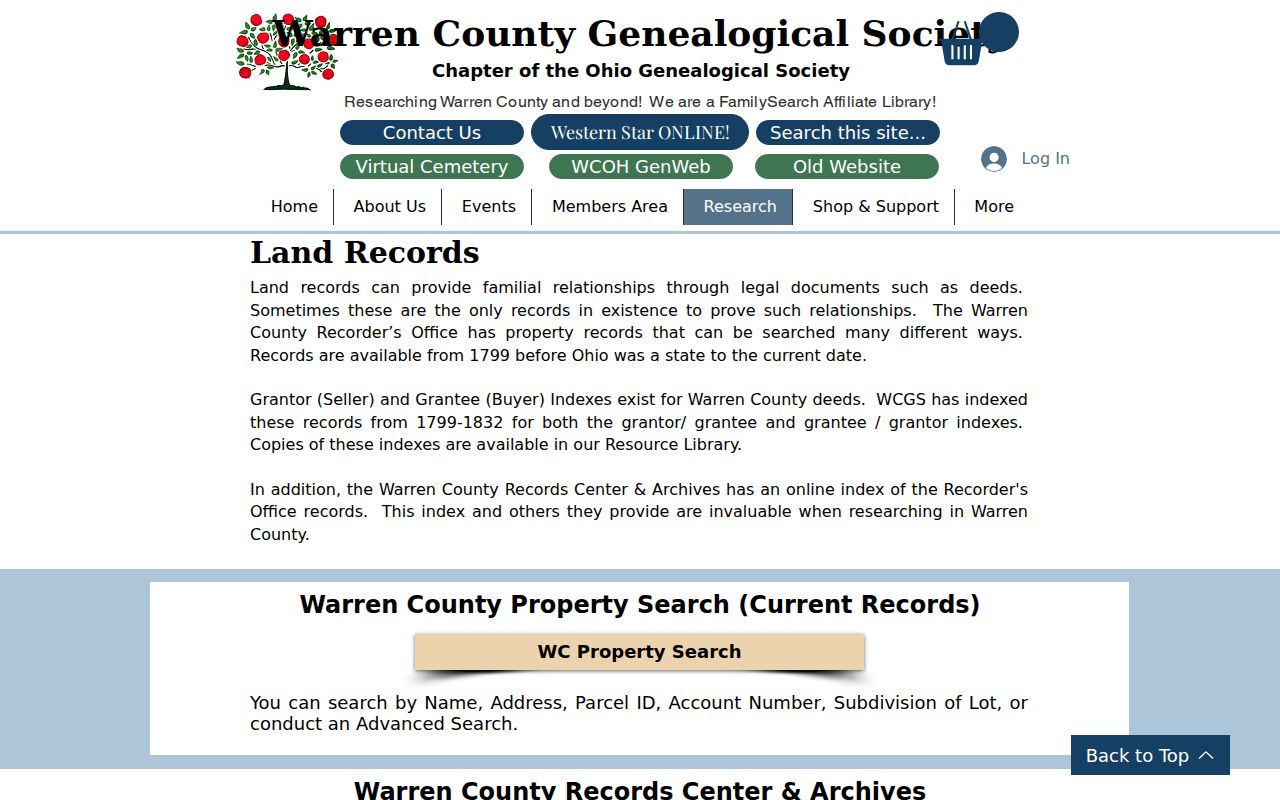
Early indexes make a focused request possible, while the Recorder document remains the test for a connected Mason parcel trail.
Mason Address Record Maps
Before connecting a past resident to a building, check the Mason Sanborn maps. The verified sequence has one 1898 sheet, two 1911 sheets, and nine February 1946 images. The 1946 index separates East and West Main, North and South East, and several sections of Church, Forest, Reading Road, and Route 42. A map can establish that a street range or structure appears in a mapped period. It cannot name the people inside.
Old local names need their own check. Mason was platted as Palmira, also rendered Palmyra, in 1815 and became Mason in 1835. The older route is today’s Route 42, while Main Street followed a later alignment. Search Mason and Palmira or Palmyra where the date calls for it, and retain directional forms exactly as they appear. No official source was found for a citywide renumbering year.
Mason Historical Society’s local history is the source context for testing an early place-name clue.
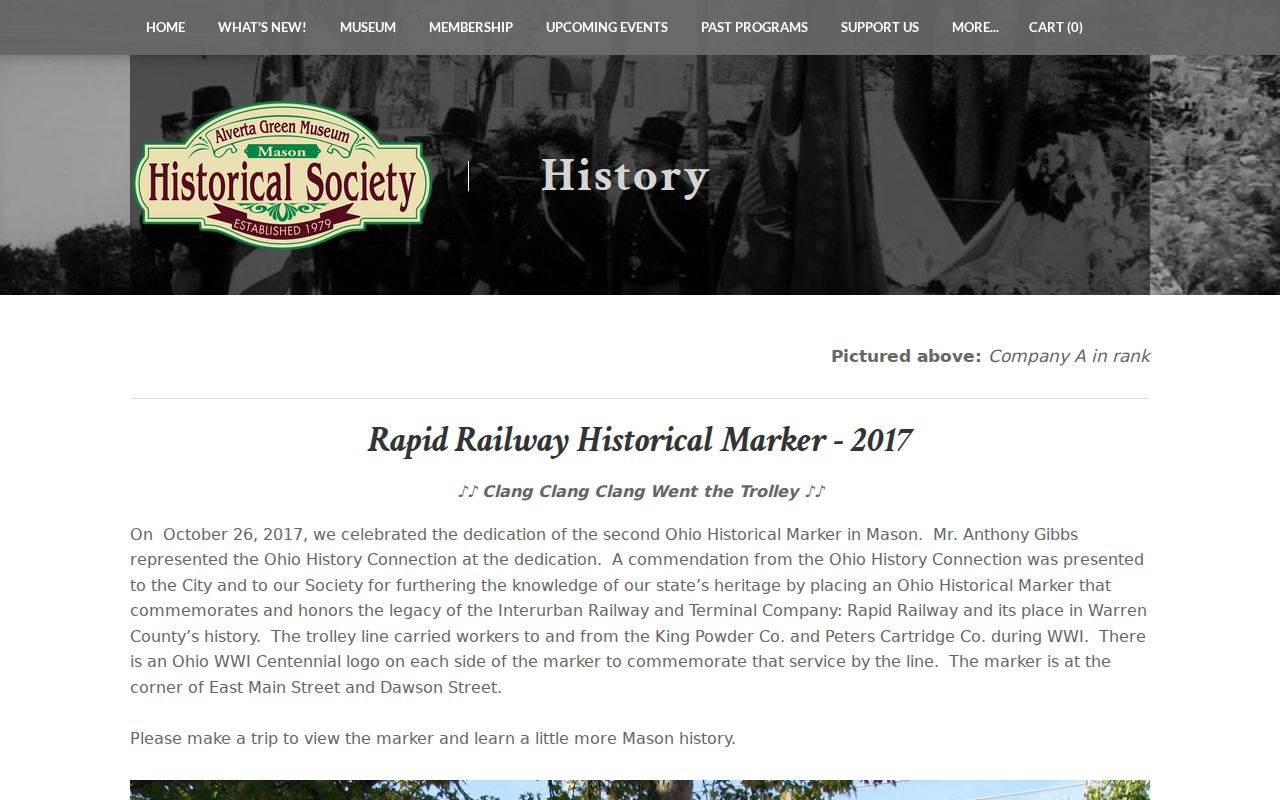
The Palmira-to-Mason change is a search term and map check, not evidence that an older address automatically converts to a current street number.
Mason Previous Residents Households
Ownership is only one part of who lived here before. Exact Mason household city-directory and reverse-run holdings have not been published by the inspected repositories, so use a dated local phone-book or directory item only after WCGS or the Historical Society identifies the specific edition. The historical collections themselves are described on the Mason city directories page. A name in a phone book may describe a subscriber, rather than every person at an address.
Pairing directory and census years adds a separate household layer. WCGS reports all Warren County federal census records and says the 1950 census is the most recent public federal enumeration at the research date. A census can show a household on its enumeration date, but it should be linked to the Mason street only when the page, enumeration place, and address evidence agree.
- Locate a dated local phone-book or directory item and copy the edition, page, surname form, and street form.
- Check whether it is alphabetical or has an identified address arrangement. Do not assume a criss-cross section exists.
- Pair the item with the nearest open census year and preserve the census page or image reference.
- Use the period Sanborn sheet to test whether the street range and building setting fit the dated item.
- Return to the deed chain if the parcel or legal description indicates that the address may refer to a different property.
Mason Past Resident Endpoints
A disappearance from a dated source can mean a move, a death, an unlisted number, or a source gap. WCGS’s obituary master index, which reaches from about 1810 to the current year, is a practical way to test a death or survivor clue. A Warren County Probate Record Search can be queried by name or company, case number, or filed date, one criterion at a time. It is a case lead, not a current-address source.
Probate records are presumed open unless an exemption applies, but some materials have confidentiality limits. For a request that needs a case file or official copy, contact the Probate Court rather than assuming every paper is visible online. This keeps a Mason past-residents trail tied to the actual custodian and the record’s access rules.
Mason House Record Fallbacks
When the online trail becomes thin, the documented fallback is the Warren County Records Center & Archives. It retains county government material back to 1803 and says public material that is at least 75 years old can generally be researched in its reading room at 406 Justice Drive, Room 52. The County’s 2025 archive and microfilm actions also show why historical access may still depend on physical materials and staff channels.
Bring the parcel, legal description, book/page or document reference, date range, and source notes. The archive can help resolve a missing government record, while WCGS and the Historical Society provide historical context from their own collections. Keeping those roles distinct makes a Mason previous residents trail easier to check later.
The Warren County Records Center & Archives is the local reading-room fallback for a documented historic-record request.
The archive supplements the Auditor and Recorder chain when a Mason record requires an in-person historical-material check.
Note: Record the repository, document date, parcel or legal description, and party role before drawing a conclusion about a Mason address.