
Mason City Directory Holdings
Mason has no verified, publisher-named, year-by-year household directory run in the reviewed sources. The dependable starting shelves are instead Warren County Genealogical Society resources, local phone books, historical-society material, census copies, and Mason Public Library databases. The Genealogical Society lists a City Directories category, but its detailed page is marked under construction. Ask for the exact title, edition, publisher, and volume date before treating any local book as part of a continuous Mason run.
These categories make the limits visible. A dated phone book can be an address clue. A census is a household snapshot. A Sanborn sheet supplies physical setting. None should be presented as proof of every person connected with a property.
| Collection | Years | Where Held | Access |
|---|---|---|---|
| WCGS City Directories category | Detailed volume list not published | Warren County Genealogical Society Resource Library | Call or visit to confirm title, publisher, and date. |
| Area phone books | Individual years not published | WCGS Resource Library | In-person dated name and address research. |
| Yearbooks and telephone directories | Individual volume years not published | Warren County Historical Society | Scheduled visit or research request. |
| Mason Sanborn maps | 1898, 1911, and 1946 | Ohio Web Library | Online street-range and building context, not household names. |
| N.W. Ayer & Son town directory | 1915 | Library of Congress | Online town and business context, not a householder list. |
Mason Public Library’s genealogy page documents its in-library Ancestry Library Edition access, a useful first stop for census, land, probate, church, directory, and obituary research that needs a local follow-up.

Library access adds context to a Mason directory clue, but it does not establish that a complete Mason household series is held there.
Mason Directory Limits
The absence of a verified run is itself a research result. No official source located a complete publisher-named Mason household series or a reverse, also called criss-cross, run organized by address. It would be inaccurate to assign missing years, claim a print schedule, or borrow a Cincinnati collection as if it covered Mason households. A directory lead should be cited by the exact item in hand, not by a general label.
The WCGS research room is the best place to verify a local shelf. Its Resource Library is at 406 Justice Drive in Lebanon, open Monday through Friday from 9 a.m. to 4 p.m., and its listed phone is 513-695-1144. The collection includes area phone books, census material, on-site obituary binders and microfilm, plus local indexes. A staff member can confirm whether an identified volume has an alphabetical or address arrangement.
Note: A missing online catalog detail is not proof that a Mason directory never existed, only that the inspected sources do not document a complete run.
The Warren County Genealogical Society research page is the documented access channel for checking a possible Mason directory title before relying on it.
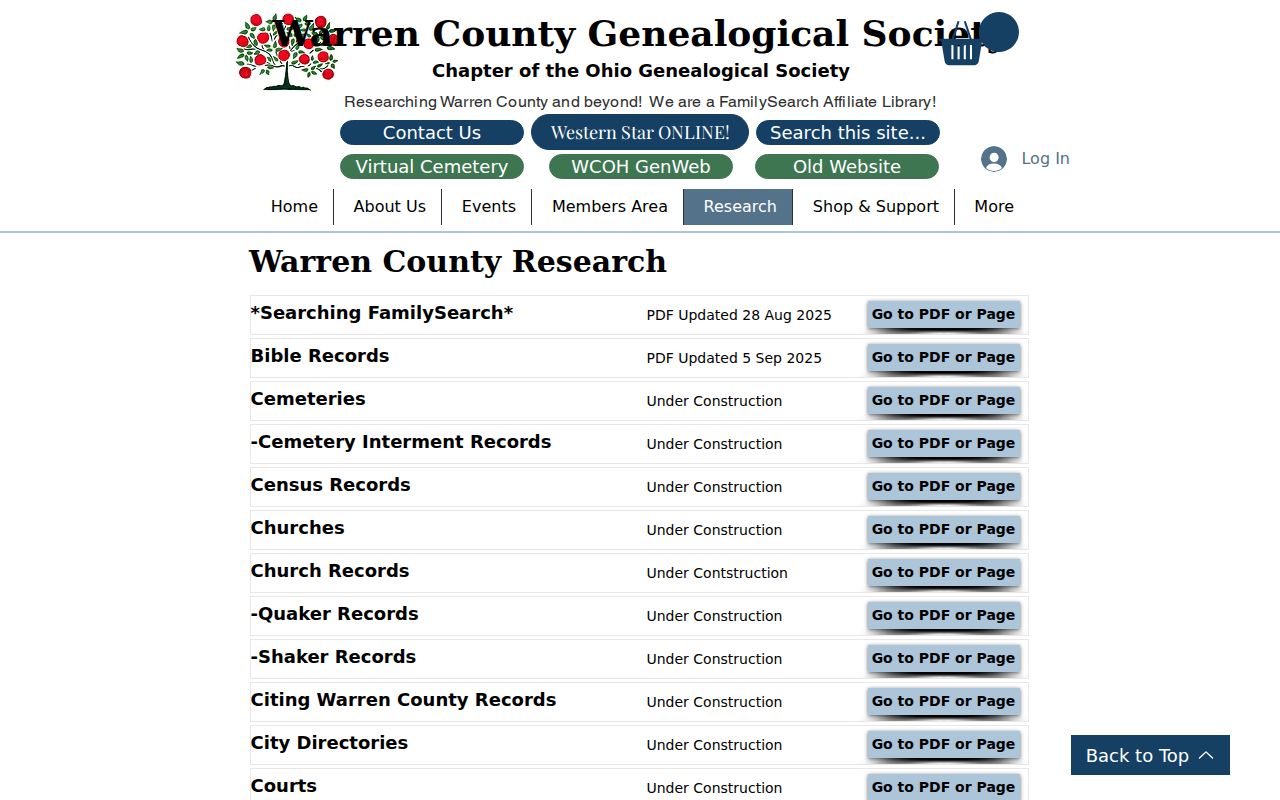
Confirming the actual edition at the research room preserves the difference between a library lead and a verified Mason source.
Mason Directory Research Rooms
Historical work often moves across several Mason and Warren County shelves. The Warren County Historical Society collections list telephone directories and yearbooks alongside cemetery, school, church, probate, photograph, plat, and newspaper material. Files may be pulled for a scheduled visit or provided through a research-request form. That makes it a companion repository when a date, school, church, or local-paper clue needs checking.
WCGS also reports an obituary master index reaching from about 1810 to the current year, all Warren County census records, and several local vital indexes. A WCGS vital-record index page can supply a book or date lead, but an index is not the same thing as an official copy. For Mason family research, preserve the repository, collection name, edition or publication date, and image or page number with every note.
The WCGS vital-record indexes provide a related dated research layer that can test a Mason directory name against a life event.
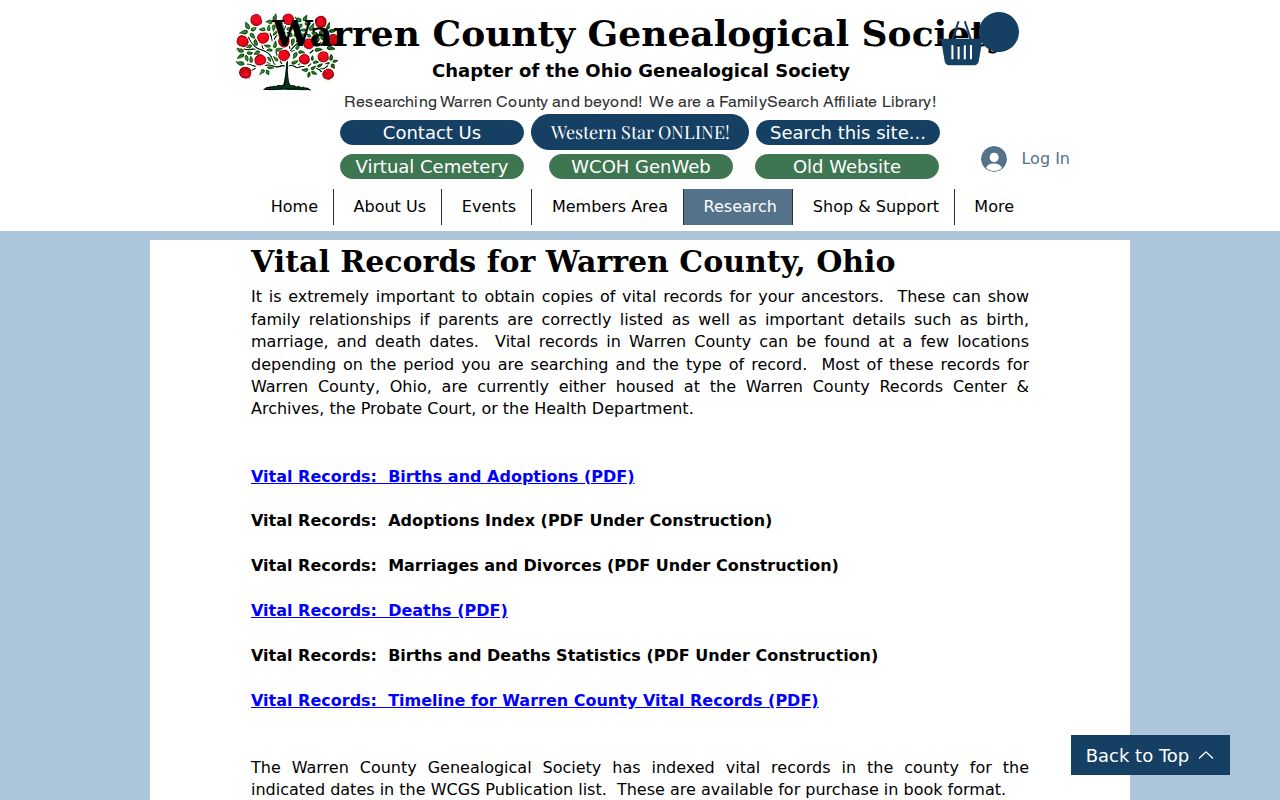
A vital index may point to a name and time period, while the local directory or phone-book item supplies the separately dated address clue.
Mason Sanborn Directory Context
For old Mason addresses, the strongest verified visual collection is the Ohio Web Library Sanborn set. It has one 1898 sheet, two 1911 sheets, and a February 1946 sequence with six sheets plus three indexed images. The 1946 material names street ranges and landmarks including the post office, public school, churches, the fire department, and the Mason Canning Company. It can show whether a building or street range appears in a mapped era, not who lived there.
Check the sheet’s printed range before treating an address as covered. E. Main and W. Main, N. and S. East, Church, Forest, Reading Road, Kings Mills Road, and U.S. Route 42 appear as separate forms in the indexed material. Keep those directional forms in the research notes, especially when a phone-book entry uses a shorter street name.
The 1946 Mason Sanborn viewer provides the period map context for this address check.
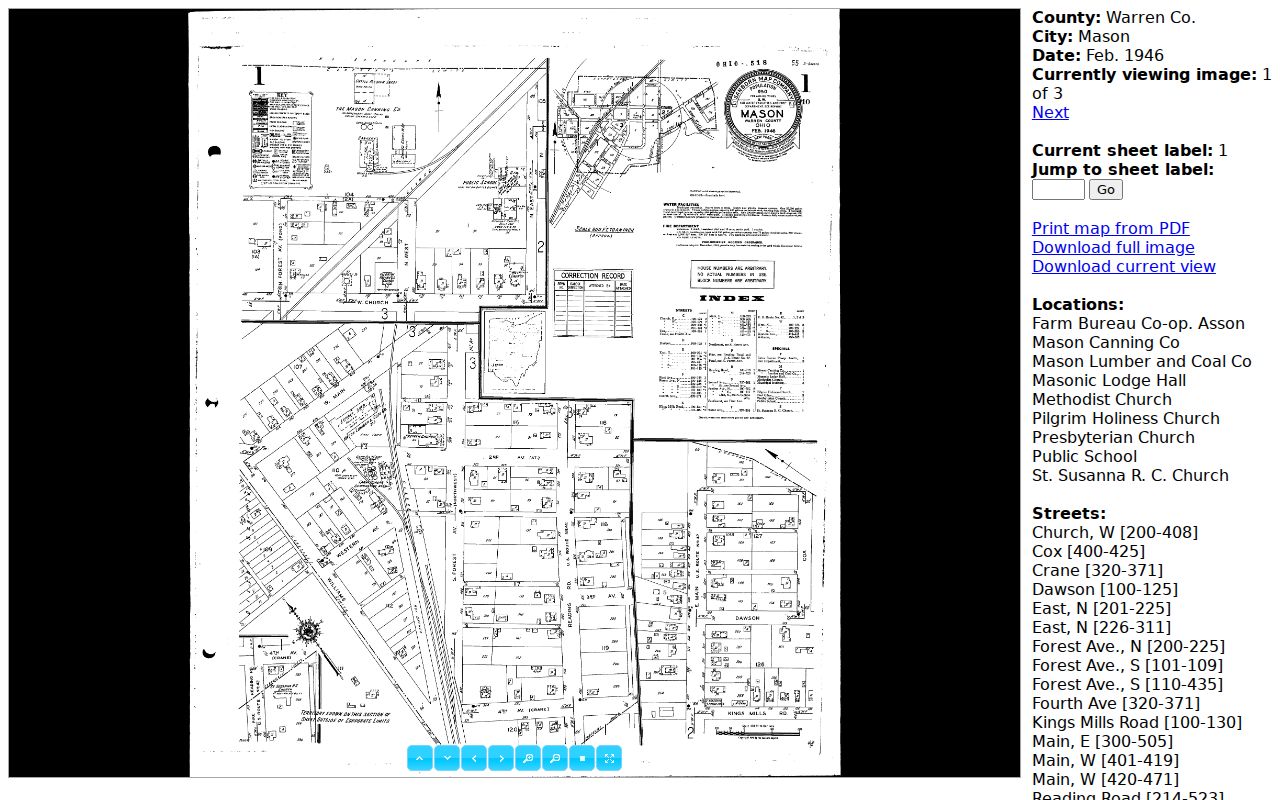
The map helps test an address form against its period setting before a Mason directory clue is joined to a household record.
Reading Mason City Directory Entries
Read the unit of coverage before extracting facts. The only inspected Mason directory item is a 1915 town and business entry, not an individual-householder line. It prints the place name, county and regional setting, transportation and service descriptors, local commerce, and a newspaper field. It does not support a claim about a particular Mason household, spouse, address, or ownership status.
When a local phone book or household volume is found, transcribe only what it prints. Record the edition, page or line, name form, street form, and any printed abbreviation key. A label that is absent should remain absent. The inventory below separates a documented town entry from information that a household entry might, or might not, contain.
| Place name | The documented 1915 item identifies Mason, Ohio. |
|---|---|
| County setting | The inspected entry places Mason in Warren County. |
| Service and transport notes | These describe the town entry, not a resident. |
| Newspaper field | The item names the Warren County Appeal and its publication details. |
| Household fields | Only copy a name, address, relationship marker, or other label when the specific local volume prints it. |
- Criss-cross directory
- An address-arranged or reverse directory, if a repository identifies one. No verified Mason run was located.
- Householder index
- An alphabetical guide to the person or household named by a particular volume. Its scope depends on that volume.
- Abbreviation key
- The volume’s own explanation of shortened labels. Photograph or note it before interpreting an entry.
The 1915 Mason Directory Entry
The Library of Congress 1915 N.W. Ayer & Son item is useful because its boundaries are clear. It is a town-level listing with population, regional placement, railroad and telephone details, banks, local industries, and a newspaper record. It is not a city directory of named Mason residents. Using it that way would turn a valid historical source into an unsupported household claim.
Its value is contextual. A researcher can date the town description, compare its named services with a newspaper search, then return to WCGS or the Historical Society for a local person or address lead. The printed population figure belongs to that 1915 item alone and should not be treated as a current estimate or a count of the people in a directory.
Palmira in Mason Records
Mason records may use more than one place name. William Mason’s settlement was platted as Palmira, also spelled Palmyra in source descriptions, in 1815. Officials changed the name to Mason in 1835 after learning that another Ohio community used the Palmira name. Older road language can also differ: the historic route is now Route 42, while Main Street was later aligned on a different course.
Search both Mason and Palmira or Palmyra when the date points to the early town. Retain East, West, North, and South forms exactly as printed. The historical difference is a search test, not evidence that a present address had a different number. No official source was found for a Mason-wide renumbering date.
The Warren County Historical Society collections page is a documented route for researching the local history behind a Mason place-name clue.

Collection staff or a research request can help locate a dated historical item without inventing a Mason directory sequence.
Tracing Mason City Directories
A dated Mason city directory clue works best in a short, repeatable chain. Start with a surname and approximate year in the WCGS census, obituary, or index holdings. Then locate a dated phone book or directory item at WCGS or the Historical Society and preserve both the name spelling and street form. Pair that item with the nearest public federal census and a Sanborn sheet that actually covers the street range. For a property-owner question, use the Recorder and Auditor records separately from the household trail.
- Write down the surname exactly as it appears, plus the date and source repository.
- Confirm the item’s format: town entry, alphabetical phone book, household volume, or a reverse section.
- Compare the street form with the relevant Mason Sanborn sheet and keep any directional label.
- Pair the dated clue with the nearest open census record, recognizing that the 1950 census is the newest public federal enumeration at the research date.
- Use the WCGS obituary index or Probate Court records to investigate a move, death, or estate lead without assuming the reason from a missing name.
A name in a phone book may identify a subscriber. A census describes a household on its enumeration date. A deed identifies parties to a transfer. The evidence becomes stronger when each source agrees on date, address form, and role. A modern record check can follow a historical finding through the Mason resident lookup path when a current official record is needed.
Mason Historical Record Fallbacks
When a web listing is thin, move through the documented local channels instead of filling the gap with a broad search. WCGS supplies the research-room and index route. Mason Public Library provides in-library genealogy databases. The Historical Society accepts scheduled visits and research requests. The Warren County Records Center & Archives holds government materials back to 1803 and says public material at least 75 years old can generally be researched in its reading room.
Those channels serve different records. The archives can support a county-government source, while the Historical Society may hold a yearbook, telephone directory, church history, or photograph. Record the custodian and access condition beside each result. That preserves the useful uncertainty in Mason historical work and makes a later review possible.
Note: A library or archive catalog lead should be followed by the item itself, including its date and page, before it is used as family-history evidence.